
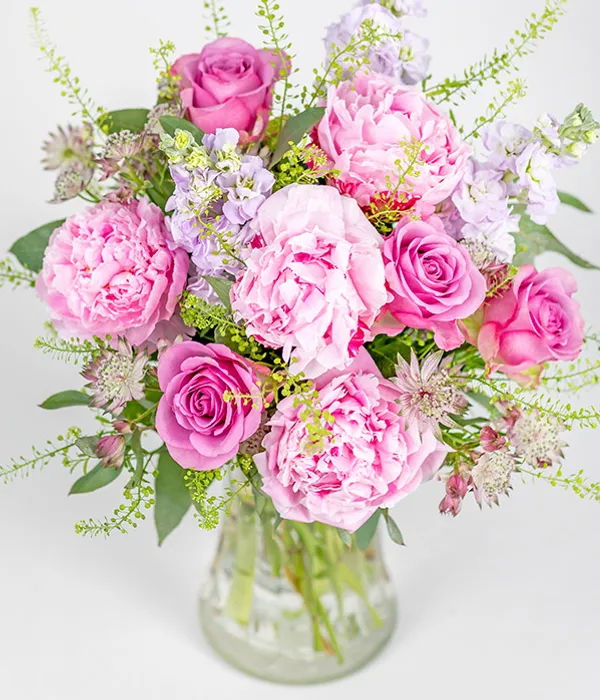
Peonies & Roses
Astrantia: The Starry Charm of Cottage Gardens
Astrantia, also known as Masterwort, is a delicate and intricate flower admired for its star-shaped blooms, finely textured petals, and romantic, vintage appeal. Often used in cottage gardens, wedding bouquets, and wildflower arrangements, Astrantia adds a natural, whimsical beauty and soft movement to any setting. Native to Central and Eastern Europe, it thrives in cooler, partially shaded environments. Symbolising strength, protection, and elegance, Astrantia is loved for its ethereal appearance and versatility—both fresh and dried.


COMMON NAME
Astrantia

BOTANICAL NAME
Astrantia spp.

ORIGIN
Central and Eastern Europe

PEOPLE ALSO CALL IT
Masterwort

FLOWERING TIME
Late spring to early autumn (May to September)

ASPECT
Partial shade, moist but well-drained soil

SYMBOLISM
Strength, protection, grace, elegance
Care Tips for Cut Astrantia in a Vase
Trim stems diagonally: Helps improve water absorption.
Use clean water and change regularly: Refresh water every two days and use floral preservative for longevity.
Remove submerged leaves: Prevents bacteria and cloudy water.
Combine with airier blooms: Astrantia complements roses, scabiosa, or ranunculus beautifully.
Dries well: Hang upside down in a dry, shaded spot for long-lasting dried flowers.
Symbolism & Meaning
Astrantia symbolises protection and inner strength, often seen as a guardian flower in folklore and healing gardens. Its gentle, graceful form also represents elegance, calm, and subtle charm. Because of its resilience and ability to thrive in quiet corners of the garden, it’s often associated with quiet confidence and enduring beauty, perfect for celebrating people with strength behind a soft appearance.
Types of Astrantia
There are several beautiful varieties of Astrantia, each with slightly different hues and patterns:
- Astrantia major ‘Roma’ – Pale pink flowers with a silvery shimmer; long flowering and popular in floristry.
- Astrantia major ‘Claret’ – Deep red-purple blooms with dramatic flair.
- Astrantia ‘Star of Beauty’ – Light purple-pink flowers with a compact growth habit.
- Astrantia ‘Shaggy’ – Pale greenish-white petals with a looser, more wildflower-like look.