Radiance
Best Flowers to Grow for Cutting in Ireland
Few things make a home feel brighter than a vase filled with fresh flowers – especially when you’ve grown and picked them yourself.
From scented sweet peas and colourful cosmos to spectacular dahlias that keep flowering into autumn, there are plenty of beautiful flowers to grow for cutting in Irish gardens. Better still, you don’t need a huge garden or years of experience to get started.
Whether you’re creating your first cut flower garden, adding a few productive plants to an existing border or growing flowers in pots, this guide covers some of the best flowers to grow for cutting in Ireland, including easy varieties to grow from seed, statement dahlias and classic roses.
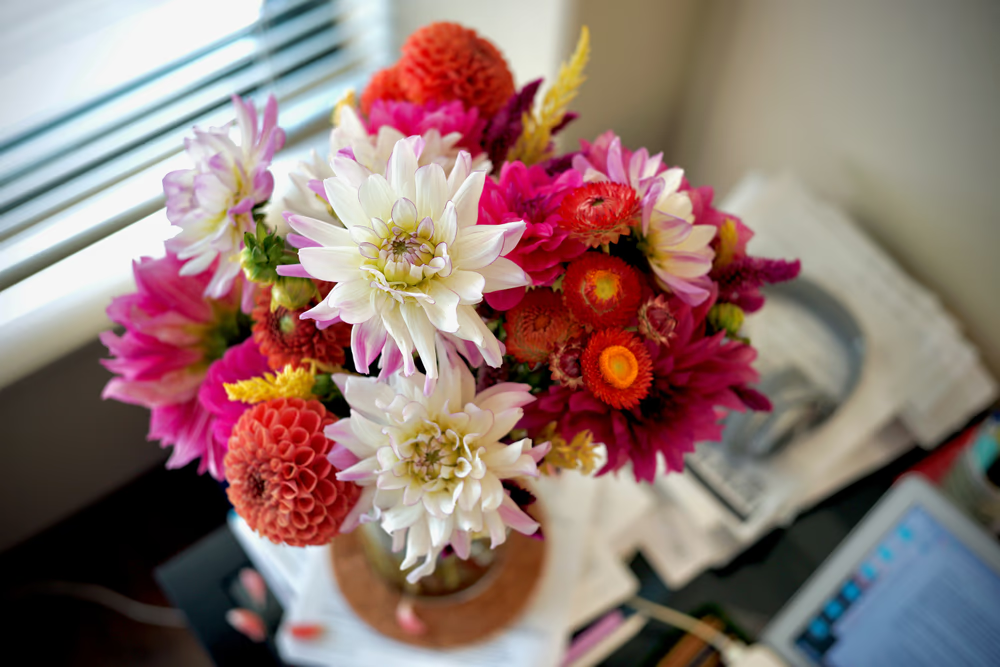
What is a cut flower garden?
A cut flower garden is simply an area where flowers are grown specifically to be picked and enjoyed indoors.
You can create a dedicated cutting patch, use part of a raised bed or mix flowers for cutting through your existing borders. If outdoor space is limited, several varieties can also be grown in containers.
The advantage of a dedicated cutting garden is that you can plant for productivity rather than worrying about leaving gaps in ornamental borders every time you pick a bouquet.
Most popular cutting flowers perform best somewhere bright and reasonably sheltered, with fertile, well-drained soil. Taller varieties may also need support as they grow.
The best flowers for a cutting garden in Ireland
A good cutting garden should give you plenty to choose from throughout the flowering season.
Rather than growing only large statement blooms, try combining different flower shapes and heights. Think focal flowers such as dahlias and roses alongside tall stems, delicate filler flowers and scented varieties.
Here are some of the best flowers for cutting to consider:
1. Sweet peas
Sweet peas are difficult to resist when you’re planning a cutting garden.
Their delicate, ruffled flowers come in shades ranging from white and soft pink to purple, blue and rich burgundy, while many varieties have a beautiful fragrance.
They’re grown as annuals and need something to climb, such as a trellis, netting or canes. Once flowering starts, pick them frequently. Removing flowers regularly helps prevent the plants from concentrating their energy on producing seed.
Why grow them for cutting?
Beautiful scent, romantic-looking flowers and plenty of stems through the flowering season.
2. Cosmos
If you're searching for easy cut flowers to grow, cosmos are an excellent place to start.
They produce daisy-like flowers above soft, feathery foliage and look wonderful in informal arrangements. White, blush, pale pink and deep crimson varieties are widely available.
Cosmos can be grown from seed each year and will often keep flowering for months when blooms are regularly cut or faded flowers are removed.
Their delicate appearance also makes them particularly useful for softening arrangements containing larger flowers.
Why grow them for cutting?
Easy to raise from seed, generous flowering and excellent for adding movement to a bouquet.
3. Zinnias
For bold summer colour, try zinnias.
Their flowers come in an enormous range of colours, including pink, orange, red, yellow, green and cream. You’ll also find everything from single flowers to rounded, densely petalled forms.
They appreciate warmth and sunshine, so choose the sunniest and most sheltered part of your garden where possible.
Taller varieties are generally the most useful for cutting because they give you longer stems for arranging.
Why grow them for cutting?
Colourful, productive and available in an impressive range of varieties.
4. Dahlias
For sheer variety, dahlias are among the best flowers for a cutting garden.
They range from neat pompons and ball-shaped flowers to huge decorative blooms, so you can grow completely different-looking flowers within the same plant family.
Dahlias are especially useful because they flower later in the season, helping to keep the cutting garden productive after some early-summer favourites have finished.
Keep cutting mature flowers and removing faded heads to encourage continued flowering.
Best Dahlias for Cut Flowers
When choosing the best dahlias for cut flowers, look for varieties with strong stems, productive plants and flower heads that suit the arrangements you want to create.
Some favourites worth considering include:
- Dahlia 'Café au Lait'
Famous for its enormous, softly coloured decorative blooms. Its creamy blush tones work beautifully in romantic arrangements.
- Dahlia 'Cornel'
A ball dahlia with beautifully rounded flowers and strong colour, making it particularly useful for adding structure to bouquets.
- Dahlia 'Bishop of York'
Bright flowers contrasted against darker foliage make this an eye-catching choice both in the garden and in a vase.
You certainly don't have to choose only one. Growing several varieties with different colours and flower shapes will give you far more flexibility when making arrangements.
5. Roses
Roses remain one of the classic flowers for cutting, combining beautiful blooms with elegant stems and, in many varieties, gorgeous fragrance.
If you're planting roses specifically for the vase, look beyond colour alone. Consider stem length, repeat flowering, fragrance and how productive the plant is likely to be.
Best Roses for Cutting
Hybrid tea roses are particularly useful for traditional flower arranging because they tend to produce large flowers individually on upright stems.
Repeat-flowering varieties are also useful in a cutting garden because they can provide more than one flush of flowers throughout the season.
Whichever rose you choose, plant it somewhere with plenty of light and enough space for good air circulation.
Why grow them for cutting?
Classic flower shape, beautiful colours and the potential for exceptional fragrance.
6. Sunflowers
Sunflowers are one of the easiest cut flowers to grow, making them particularly good for beginners.
And they don't all have to be enormous.
If you're growing sunflowers primarily for bouquets, look for branching or smaller-flowered varieties. These tend to give you stems that are easier to arrange than giant sunflower cultivars grown for height.
Successional sowing – planting smaller batches at different times – can also help spread the flowering period.
Why grow them for cutting?
Straightforward to grow, wonderfully cheerful and ideal for colourful summer bouquets.
7. Cornflowers
For a relaxed, cottage-garden feel, add cornflowers.
Their distinctive blue flowers work beautifully alongside whites, pinks and softer pastel shades, although varieties in other colours are available too.
They're relatively simple to grow from seed and make lovely supporting flowers in informal arrangements.
Why grow them for cutting?
Easy to raise, distinctive colour and perfect for wildflower-inspired bouquets.
8. Snapdragons
Snapdragons – also known as antirrhinums – are brilliant when an arrangement needs height.
Their upright stems are covered with colourful flowers, creating a completely different shape from rounded roses, dahlias and zinnias.
Plant a mixture of shades or choose a smaller colour palette if you prefer coordinated bouquets.
Why grow them for cutting?
Long, upright flower spikes that provide height and structure.
9. Scabious
Scabious produces delicate pincushion-shaped flowers on slender stems.
It’s an excellent supporting flower because it adds detail and texture without overpowering larger blooms.
The attractive seedheads can also provide additional interest later in the season.
Why grow them for cutting?
Delicate flowers, useful texture and an airy appearance.
10. Larkspur
Tall stems covered in flowers make larkspur another excellent option for creating height.
You'll find varieties in shades of blue, lilac, purple, pink and white, making them easy to combine with many traditional cottage-garden flowers.
Try pairing them with roses or cosmos for an arrangement that mixes strong vertical stems with softer flower shapes.
Best cut flowers to grow from seed
Starting a cutting garden doesn't need to be expensive.
Growing annual flowers from seed is one of the easiest ways to fill a larger area with plenty of plants. It also gives you the freedom to experiment with different colours and varieties each year.
Some of the best cut flowers to grow from seed include:
- Cosmos
- Sweet peas
- Zinnias
- Sunflowers
- Cornflowers
- Scabious
- Larkspur
- Calendula
For beginners, start with three or four types rather than trying to grow everything in your first year.
Combining one statement flower, one taller variety and a couple of lighter supporting flowers can already give you the ingredients for lovely homegrown bouquets.
When should you start a cut flower garden in Ireland?
When you sow and plant will depend on the flower you're growing and the conditions in your particular garden.
Many annual cutting flowers are started during spring, either under cover before being planted outside or sown directly once conditions are suitable.
Hardier varieties can cope with cooler conditions, while tender flowers such as zinnias and cosmos should be protected from frost while they're young.
Irish weather can vary considerably from one garden to another, too. A sheltered coastal garden may behave quite differently from a colder or more exposed inland site.
Rather than relying on one date for every flower, check the sowing and planting guidance for each variety and pay attention to conditions where you live.
Planning a mixture of early, mid and late-flowering varieties will help extend your cutting season.
How to start a cut flower garden for beginners
A cut flower garden for beginners can be surprisingly simple.
You don't need a large formal cutting patch. Even one sunny raised bed or a collection of containers can produce enough flowers for occasional arrangements.
Choose the right position
Most popular cutting flowers prefer plenty of light, so look for a bright area of the garden.
Shelter is useful too. Dahlias, cosmos, sunflowers and other taller plants can be affected by strong winds, particularly once they're carrying plenty of flowers.
Prepare the soil
Good soil will give your flowers a stronger start.
Remove weeds and add organic matter where needed. Soil that holds enough moisture without becoming persistently waterlogged will suit many commonly grown cutting flowers.
Start with easy varieties
Your first cutting garden doesn't need to contain twenty different flowers.
Cosmos, sunflowers, sweet peas, cornflowers and zinnias are all good options if your priority is finding the easiest cut flowers to grow.
Add more challenging or perennial varieties once you know what performs well in your particular garden.
Grow different flower shapes
Think about what you'll want to put in a vase.
A useful mix might include:
- Focal flowers – dahlias, roses or sunflowers
- Tall stems – snapdragons or larkspur
- Airy flowers – cosmos or scabious
- Fragrant flowers – sweet peas
- Foliage – greenery to add shape and volume
You'll get far more interesting arrangements from a mixture like this than you would from filling the whole bed with one flower.
Support taller plants
Many plants grown for cutting are deliberately selected for long stems.
Unfortunately, longer stems can also mean plants are more vulnerable to wind.
Use stakes, netting or other plant supports early enough that flowers can grow through them naturally.
Keep picking your flowers
A cutting garden is there to be cut, so don't be afraid to use it.
For many repeat-flowering plants, regular picking and deadheading encourages the plant to continue producing flowers rather than setting seed.
Can you grow cut flowers in pots?
Absolutely! Containers are a useful option if you have a patio, balcony or smaller garden.
Compact cosmos, sweet peas, calendula and some dahlias can all work well in pots, provided the container is large enough for the mature plant.
Container-grown flowers can dry out more quickly than those growing in the ground, so check them regularly during warmer or windy weather.
You'll also need to make sure pots have adequate drainage.
For sweet peas and other climbers, include a support structure at planting time rather than trying to add one after the plant has become established.
How to cut flowers from your garden
Knowing how to cut flowers can make a noticeable difference to how well they perform in the vase.
Try to harvest during the cooler part of the day rather than under strong midday sun.
Use clean, sharp secateurs or snips and take a useful length of stem, while leaving enough growth on the plant for it to remain healthy.
Place freshly cut stems into water promptly.
Once you're ready to arrange them:
- Start with a clean vase.
- Remove foliage that would sit below the waterline.
- Trim the bottom of the stems where appropriate.
- Add fresh water.
- Keep the arrangement away from radiators and strong direct sunlight.
Remove fading flowers as the arrangement ages and refresh the vase water regularly.
Which cut flowers last the longest?
How long cut flowers last depends on the species, variety, stage at which they're harvested and how they're cared for afterwards.
Flowers such as chrysanthemums, alstroemeria, zinnias and many roses are known for giving good vase life when handled correctly.
But flower care is just as important as flower choice.
Starting with a clean vase, keeping foliage out of the water and refreshing the water regularly can all help your flowers stay attractive for longer.
Grow your own – or let us deliver them
There's something very satisfying about heading into the garden and cutting your own flowers.
But sometimes you want a beautiful bouquet without waiting weeks or months for the garden to bloom.
If your cutting patch isn't ready – or you simply fancy sending flowers to somebody special – Eflorist makes it easy to arrange fresh flowers delivered in Ireland.
From roses and lilies to colourful seasonal bouquets, you can choose flowers for birthdays, anniversaries, celebrations or simply to brighten someone's day.
Eflorist offers flower delivery across Ireland, including next-day delivery options, with bouquets covered by a seven-day freshness guarantee.
So whether your flowers come from your own garden or arrive beautifully arranged at the door, there's always a good excuse to fill the house with fresh blooms.